
Kris English, PhD
Professor Emeritus of Audiology
University of Akron
Part 1 began with the observation that addressing healthcare inequities requires vigilance, specifically with attention to the topic of relational dignity. Chochinov1 points out, “Although the literature on dignity is sparse, it shows that ‘how patients perceive themselves to be seen’ is a powerful mediator of their dignity” (p. 184). To “be seen” or to “feel seen” are familiar phrases that describe recognition from another person, referred to in Part 1 as relational dignity.2
Chochinov3 laid the groundwork for an intervention designed for vulnerable patients to help them feel seen, known as the Patient Dignity Question: “What do I need to know about you as a person to take the best care of you that I can?”
Some Background
The Patient Dignity Question (PDQ) was designed to help healthcare providers understand their patients in settings where one’s dignity can feel especially diminished: palliative care, nursing homes, and end-of-life care.3-8 The question, “What do I need to know about you as a person to take the best care of you that I can?” was informed by empirical research to help health care providers (HCPs) understand each patient as a person, not as a mere embodiment of their diagnosis.
The PDQ is described as a “dignity conserving intervention,” and while each PDQ interview will be unique, pre- and post-intervention measures have indicated positive outcomes, including the appreciation for “being seen.” 9,10 It is a validated process, well received by patients and clinicians, and has been recommended as a routine component of care.11 Perhaps because of its simplicity and implied humility, this question has been shown to be quite effective. One example:11
A total of 126 participants (66 patients and 60 family members) responded to the PDQ…93% felt that the information was important for HCPs to know, and 99% would recommend the PDQ for others. A total of 137 HCPs completed 293 evaluations of individual PDQs; 90% indicated that they learned something new from it, 64% that they were emotionally affected by it, 59% that it influenced their sense of empathy, and 44% that it influenced their care.
As noted, the PDQ was designed specifically for palliative and end-of-life care settings.  Recently, an additional consideration of patients in the LGBTQ community receiving care in these settings indicated comparably positive PDQ results,12 but also raises a question: why wait until the end stage of healthcare? Social dignity violations (e.g., dismissal, disregard, grouping) routinely occur across a wide range of healthcare encounters throughout a lifetime.13-18 There seems no reason to wait: researchers very familiar with the PDQ have pointed out that the PDQ “can be used by any provider type and in numerous care settings to understand patient values” as a standard of care.19 Since all patients seek relational dignity throughout their lives, extending the PDQ intervention to all patients in all settings seems feasible, or at the minimum to those with historical concerns regarding inequitable care.
Proposal: Pose the PDQ…
… optimally to all patients! And especially within discordant dyad audiology encounters as an intervention to override implicit bias.
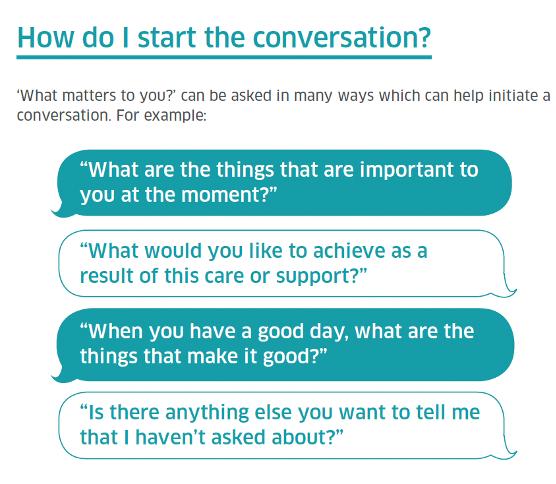
The Patient Dignity Question communicates our goal to be person-centered, and certainly qualifies as another addition to the counseling tool box. It is similar to the “What Matters to You?” query but says more than “tell me about yourself.” By also adding “to take the best care of you that I can” may (hopefully) also be heard as “what matters to you also matters to me” – that is, an authentically humble, respectful outreach, committed to relational dignity.
Concerned about saying the question accurately? We could:
- Preview the conversation with a handout for the patient beforehand, with the explanation: “I look forward to our appointment, and as we get to know each other, I would like to ask you this question….”
- Develop an intake “PDQ form” for contemporaneous notetaking: “To make sure my services are personalized to your needs, I have this form that starts out….” and after reading the Patient Dignity Question, jot down the patient’s responses and incorporate “what I need to know” into the treatment plan.
We can work out several approaches that feel comfortable and appropriate to the moment and setting – but ultimately, find a way to “go there.”
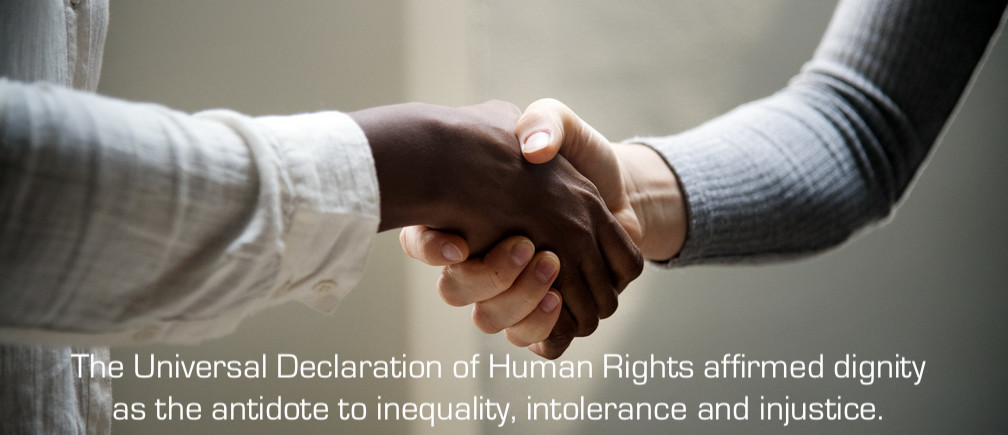
https://www.weforum.org/agenda/2018/10/why-we-need-dignity-more-than-ever-70-years-after-the-universal-declaration-of-human-rights/
Conclusion
Public attention to social inequities in healthcare will ebb and flow, but on a daily basis, individual practitioners can maintain vigilant attention and keep the issue at top of mind.
Can the “Patient Dignity Question” reduce healthcare inequities? Let’s try it and find out – and share experiences and insights with the profession.
“Not everything that is faced can be changed. But nothing can be changed until it is faced.” — James Baldwin
References
- Chochinov HM. (2007). Dignity and the essence of medicine: the A, B, C, and D of dignity conserving care. British Medical Journal, 3359(9761), 184-187.
- Jacobson N. (2012). Dignity and health. Nashville: Vanderbilt University Press.
- Chochinov HM, et al. (2005). Dignity therapy: A novel psychotherapeutic intervention for patients near the end of life. Journal of Clinical Oncology, 23(24), 5520-5525.
- Hadler RA et al. (2022). “What do I need to know about you?”: The Patient Dignity Question, age, and proximity to death among patients with cancer. Supportive Care in Cancer, 30, 5175–5186.
- Johnston B, et al. (2015a). The person behind the patient: A feasibility study using the Patient Dignity Question for patients with palliative care needs in hospital. International Journal of Palliative Nursing, 21(2), 71-77.
- Johnston B, et al. (2015b). The dignified approach to care: A pilot study using the patient dignity question as an intervention to enhance dignity and person-centred care for people with palliative care needs in the acute hospital setting. BMC Palliative Care, 14(9).
- Łabuś-Centek M, et al. (2020). The meaning of dignity patient question and changes in the approach to this issue of cancer patients during home hospice care. Palliative Medicine in Practice, 14(2), 89–94.
- McDermott P. (2019). Patient Dignity Question: Feasible, dignity-conserving intervention in a rural hospice. Canadian Family Physician, 65(11), 812-819.
- Arantzamendi M, et al.(2016). Promoting patient-centred palliative care: A scoping review of the patient dignity question. Current Opinion in Supportive and Palliative Care, 10(4), 324-329.
- Meier E, et al.( 2019). Conversations regarding personhood: Use of the Patient Dignity Question in an outpatient psycho-oncology clinic. Journal of Palliative Medicine, 22(12), 1574-1577.
- Chochinov HM, et al. (2015). Eliciting personhood within clinical practice: Effects on patients, families, and health care providers. Journal of Pain Symptom and Management, 49(6), 974–980.
- Javier NM. (2021). Palliative care needs, concerns, and affirmative strategies for the LGBTQ population.Palliative Care and Social Practice, 15(1), 1-17.
- Banerjee D, et al. (2021). Role of dignity in mental healthcare: Impact on ageism and human rights of older persons. American Journal of Geriatric Psychiatry, 29(10), 1000−1008.
- Blair I, et al. (2013). Clinicians’ implicit ethnic/racial bias and perceptions of care among Black and Latino patients. Annals of Family Medicine, 11(1), 43-52.
- Carlström R, et al. (2021). ‘Treat me with respect’: Transgender persons’ experiences of encounters with healthcare staff. Scandinavian Journal of Caring Sciences, 35, 600-607
- Job C, et al. (2022). Health professional’s implicit bias of adult patients with low socioeconomic status (SES) and its effects on clinical decision-making: A scoping review protocol. BMJ Open, 12:e059837
- Schnierle J, et al. (2019). Implicit bias: What every pediatrician should know about the effect of bias on health and future directions. Current Problems in Pediatric and Adolescent Health Care, 49, 34-44.
- van der Geugten W, Goossensen A. (2020). Dignifying and undignifying aspects of care for people with dementia: A narrative review. Scandinavian Journal of Caring Science, 34, 818–838.
- Hadler RA, et al. (2022). “What do I need to know about you?” The Patient Dignity Question, age, and proximity to death among patients with cancer. Supportive Care in Cancer, 30, 5175–5186.



 possesses” (1986, p. 391). More simply, “The factors that influence behavior are embedded in the belief that one has the capability to accomplish that behavior” (Klassen & Klassen, 2018, p. 76).



 “Clinician presence” may not be familiar to student trainees, but working with the concept might help them recognize the impact we have on patient impressions and patient outcomes. Clinician presence is defined as a “purposeful practice of awareness, focus, and attention with the intent to understand and connect” (emphasis added) with our patient. Core elements include familiar person/patient-centered behaviors and attributes:2
 patient’s emotions, attitudes, or problems are directly related to living with hearing loss or balance issues; e.g., reactions to diagnosis, concerns about recommendations, or uncertainties about shared decision-making.
 emotions or behaviors, develops an over-dependence on the clinician, or continues to use offensive language or “overshares”2 after being asked to stop. Clinicians, of course, may also find themselves crossing a boundary, by becoming overly involved with a patient or oversharing about one’s own personal life.
 coordinated healthcare teams. These days, we may likely find ourselves broaching/being broached about topics other than hearing and balance but still relevant to patient health and safety. Audiologists now inquire about medications that may adversely interact with hearing and balance4-7 and are typically required by law to intervene with a referral when we perceive indications of self-harm or suicide ideation.8 Institutions and states require us to report concerns about child and elder abuse.9,10 Other developments include screening for vision problems,11,12 cognitive and memory concerns,13-15 depression,16-19 and childhood bullying20 – of course not to diagnose but to assume responsibility for overall patient health and safety, and direct those concerns to relevant support systems. And although not directly related to our care, of course we will listen and support patients who are coping with a death in the family and similar life experiences. Person-centered care has replaced disease- or disorder-centered care.
 Not surprisingly, within a matter of seconds, racial and ethnic minority patients perceive the “unspoken” and understandably distrust the overall situation, including clinical recommendations.6,7 We cannot ignore how this dynamic undermines our goal of providing racially equitable healthcare – indeed, we are obligated to address the problem.
 Time to “Reframe”?




 human being, that person will likely sense our false front. For example, Apfelbaum et al7 found that Black patients were suspicious of Whites who adopted a colorblind racial perspective, leading them to conclude that a White person who avoids acknowledging race is a racist. Counseling in audiology requires us to communicate with honesty, not cause suspicion and distrust.10,11
 3. A Colorblind Stance is Associated with Health Care Disparities